Machine shops and component makers
CNC and VMC turning and milling, presses and grinding.

Routings and machine-hour rates, finite scheduling, shop-floor runs and OEE, preventive maintenance, and job work sent out for heat treatment and plating. Tathven Agentic ERP runs an engineering shop in one system, with an AI assistant that knows which orders are late and why.
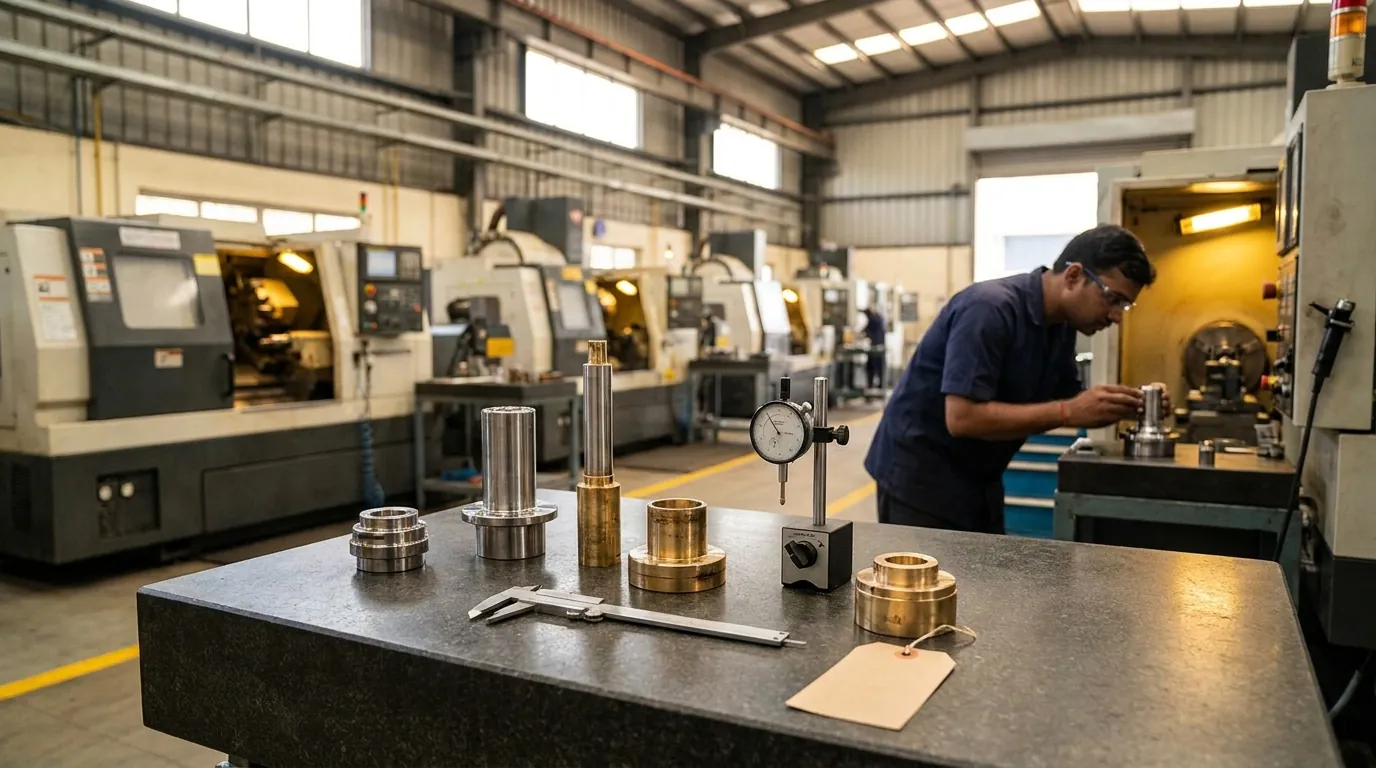
CNC and VMC turning and milling, presses and grinding.
Cutting, welding and assembly, with outside processes.
Batch and serial tracked parts to OEM schedules.
Which machine, how long to set up, how long per piece: it lives in the foreman’s head, so quotes and delivery dates are guesses.
Each part has a bill of materials and a routing: the step, the work centre, setup minutes, run time and transfer time. Outside steps carry their own lead days. Work instructions and drawings can be filed against a routing step. Sub-assemblies are made on their own production orders and handed to the parent order.
Machines are booked on a whiteboard. A rush order upsets the week and nobody sees what slips.
Each CNC, VMC, press, grinder and welder is a work centre with its machines, working calendar, machine-hour rate and operator pool with skills and leave. Production orders are scheduled on a board against what each machine can actually do, and auto-schedule places open orders by due date. Orders can be dragged to a new slot.
Ask “which production orders are running late, and why?” or “which machine is free for a 500-piece run?” The assistant reads the schedule and the machines, then prepares the schedule, a reschedule or extra overtime for you to confirm.
The machine-hour rate in the costing sheet was set years ago.
Each machine carries its own hour rate, or uses its work centre’s. A proposed rate can be worked out from the machine’s depreciation over its calendar hours.
A machine stops for a tool change or a breakdown, and the reason is never recorded. Utilisation is a guess.
The shop floor screen starts, pauses and stops each run, with good and rejected quantities and the reason for every stop. Downtime reasons and defect types come ready for engineering. Utilisation and OEE show how much of each machine’s time made good parts.
Ask “how much downtime did the VMCs have this month, and why?”
Maintenance happens when a machine breaks.
Preventive maintenance is planned for each machine, every so many days or running hours, with due and overdue flags. A planned maintenance blocks the machine’s calendar, and a daily mail lists what is due. A breakdown stop can mark the machine down.
First-piece and in-process checks are written on a sheet, and a bad batch is found at final inspection.
Each operation can carry its own checks: a measurement between limits, a yes/no or a note, taken at first piece or at stop. A failed check marks the run, and a run cannot be stopped while a required check is outstanding. Defect reports carry the root cause and the corrective and preventive actions.
Parts go out for heat treatment, plating or machining. What was sent and what came back lives in challans, and the ITC-04 return is assembled by hand.
A job order sends the work to a contractor, with material issued against it, a due-back date, and the unused material returned. The contractor’s bill clears against the job order. GST’s ITC-04 return for goods sent to job workers is built from the same records, with open challans and their return-by dates.
Ask “what is still with the heat treater?”
Bar stock and bought-out parts are bought by feel.
Material planning explodes open orders through their bills of materials, nets them against stock and open purchases, and proposes purchase and production orders for you to confirm. Parts can be tracked by batch or by serial number.
A customer wants a price for a new part today.
A costing order works out the cost from material, machine hours, job rates, wastage and overhead, and suggests a sale price. Once approved, it sets the part’s cost and price. The cost-drift view shows which parts have moved away from their standard, and anything left in work in progress when an order is short-closed goes to a variance account.
Customers buy on credit, and parts leave before anyone checks the money.
Every buyer has its own credit days and limit, and an order is cleared for dispatch only when it is paid or within credit terms. An engineering HSN catalogue comes ready, and GST returns are built from the tax ledger.
Bills of materials, routing steps with setup and run times, drawings on routing steps, sub-assemblies.
Work centres with machine-hour rates, calendars, operator pools, preventive maintenance.
Finite-capacity board, auto-schedule, drag to reschedule.
Runs, good and rejected quantities, downtime reasons, utilisation and OEE.
In-process and first-piece checks, defect reports with CAPA.
Contractor job orders, material issue and return, due-back dates, ITC-04.
Material planning, batch or serial tracking, costing orders, cost drift, production variance.
An assistant that reads the schedule and prepares the next step for you to confirm.
Bring your machines, your routings and your job workers. Tathven Agentic ERP brings the rest, on the Manufacturing plan.