Formulation manufacturers
Tablets, capsules, liquids and topicals, made in-house or on loan licence.

Formulations, APIs, excipients and packing material, by batch and expiry. Quality holds, certificates of analysis, recalls and first-expiry picking. Tathven Agentic ERP runs a pharma manufacturer or distributor in one system, with an AI assistant that never releases a batch on its own.
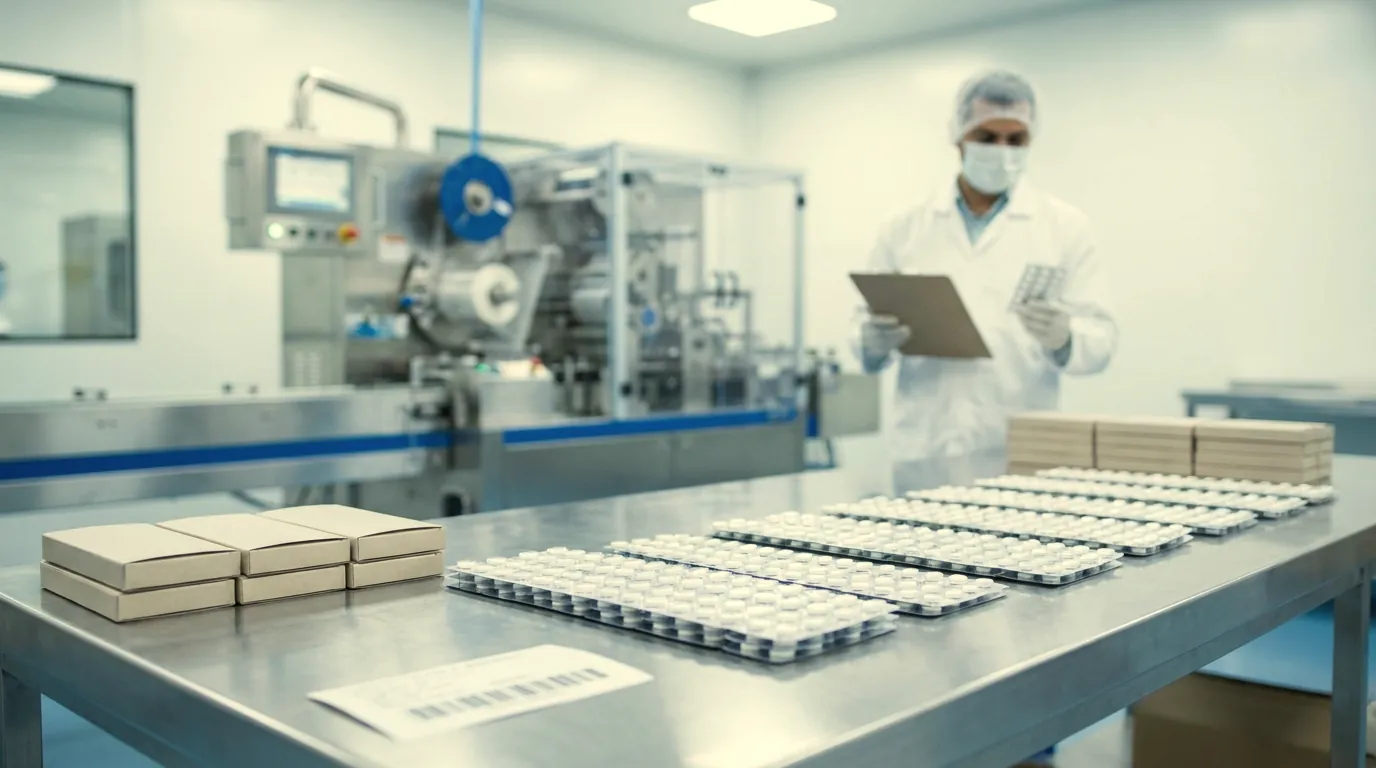
Tablets, capsules, liquids and topicals, made in-house or on loan licence.
Raw materials, intermediates and finished APIs by batch.
Buying and selling by batch and expiry, on credit terms.
Generic software has a “name” and a “price”. A pharma item needs its generic name, dosage form, strength, schedule, pack, storage and licence details, and they end up in a notes field nobody can search.
The item screen carries the pharma fields: generic name, brand, dosage form, route, active ingredients with strength, pack and units per pack, Schedule G, H, H1 or X, prescription-only flag, drug licence number, WHO-GMP flag, DPCO flag, storage conditions and cold chain. Item types come ready for formulations, APIs, excipients, solvents, primary and secondary packing, and doctor samples. Scheduled and cold-chain items are classed A automatically, so they are counted and watched first.
Raw material is used before its test results are in, or sits for a week because nobody knows it is waiting.
Quality-controlled items arrive on hold and cannot be issued until a person with the clearance right releases them, in full or in part, with a written reason. A second person’s approval can be required. Every decision is journaled with who, when and why. Quality-check templates come ready for oral solid dosage release (assay, dissolution, friability and more), API receipt, excipient receipt and packing-material receipt, and you edit them to suit your own specifications.
Ask “which batches are waiting for a quality decision?” The assistant never releases a batch itself.
Certificates are typed from registers, a failed result is retested until it passes, and the same defect returns next quarter.
Test results are recorded against versioned specifications, and the certificate of analysis prints from them. A batch cannot be released until every required test has passed. An out-of-spec result opens a laboratory investigation with the retest rules built in. Defect reports carry the root cause, corrective and preventive actions with owners and dates, and an effectiveness check. A Pareto view shows which defects keep coming back.
Batches expire on the shelf because the newest one was issued first. Near-expiry stock is found when it is too late to sell.
Goods issue picks first-expiry-first, and expired batches are kept out of it. Expiry is worked out from the manufacture date and the item’s shelf life. A weekly mail lists the batches close to expiry, and a near-expiry view shows them at any time. Batch labels print as GS1-128 barcodes with the GTIN, batch, manufacture and expiry dates.
Ask “which batches expire in the next 60 days, and where are they?”
A batch is recalled. Finding every stockist and chemist who received it takes days.
Search by your batch number or the supplier’s batch code. The recall view traces the batch through issues and orders to every customer and parcel it reached. Rejected batches go back to the supplier as a purchase return.
The formula lives in a spreadsheet, material is issued by memory, and a batch made by a loan-licence partner is tracked on challans.
Each product has a bill of materials. Production orders issue the materials and receive the finished batch, linked to the input batches it used. A job order sends work to an outside manufacturer, with material issued against it and the balance returned. Shop-floor runs record good and rejected quantities.
API and packing prices move, and the standard cost on file is a year old.
Costing orders work out the cost of a batch from the bill of materials, job rates, wastage and overhead, and set the item’s cost and price once approved. The cost-drift view compares the actual cost of completed orders with the standard and flags what has moved.
Ask “which products has cost drift flagged?”
An API with a long lead time runs out and the line stops.
Material planning works out what open orders need against stock and open purchases, and proposes purchase and production orders for you to confirm. Reorder suggestions reach the buyer before stock runs short.
Ask “what should I reorder this week?” and the assistant prepares the purchase order for you to confirm.
Every stockist has different terms, and goods leave before anyone checks the money.
Every buyer has its own credit days and limit. An order is cleared for dispatch only when it is paid, or when the buyer is on credit terms and within them. Discount schemes are set once and attached to the buyer. A carrier dispatch cannot be saved without its tracking number, and returns are recorded as returns.
Medicines, APIs, packing and services carry different GST rates, and returns are typed by hand.
A pharma HSN catalogue sets the rates for medicines, APIs, excipients and packing. GST returns (GSTR-1, GSTR-3B and the annual return) are built from the tax ledger. Purchases are reconciled against GSTR-2B, and a filed month is frozen.
An inspector asks who released a batch or changed a record.
The approval matrix decides who approves what, with a second person where you require one. Electronic signatures can be switched on for each document type: the signer re-enters their password and states what the signature means. Batch decisions are journaled, and change history keeps the old and new values of audited records.
In a regulated business, nobody wants software that acts on its own.
Tathven’s AI assistant answers from your own data, within your own access rights:
It can prepare a purchase order or a schedule change, and move documents through approval, each on a card you confirm. It never releases a batch or signs, and documents that need an electronic signature cannot be prepared by it at all.
Generic name, dosage form, strength, schedule, Rx flag, drug licence number, storage and cold chain.
Release by a named person with a reason, second-person approval, decision journal.
QC templates for OSD release, API, excipient and packing; certificate of analysis; out-of-spec investigation; CAPA.
First-expiry picking, near-expiry mails, GS1-128 labels, recall to customer.
Bills of materials, production orders, contract manufacturing by job order, shop-floor runs.
Costing orders, cost drift, material planning, reorder suggestions.
Credit terms and dispatch rules, discount schemes, returns.
Pharma HSN catalogue, GST returns from the ledger, approval matrix, optional e-signatures, change history.
An assistant that answers and prepares, and never releases or signs.
Bring your formulas, your specifications and your stockists. Tathven Agentic ERP brings the rest. Choose Inventory or Manufacturing, and grow without changing systems.