Medical-device makers
Sterile disposables, devices and kits, made in clean rooms, sterilised in-house or outside.

Quality holds and certificates of analysis, in-process checks, outsourced sterilisation, recalls and GS1 labels. Tathven Agentic ERP runs a medical-device or biotech plant from the raw polymer to the hospital invoice, with an AI assistant that never releases anything on its own.
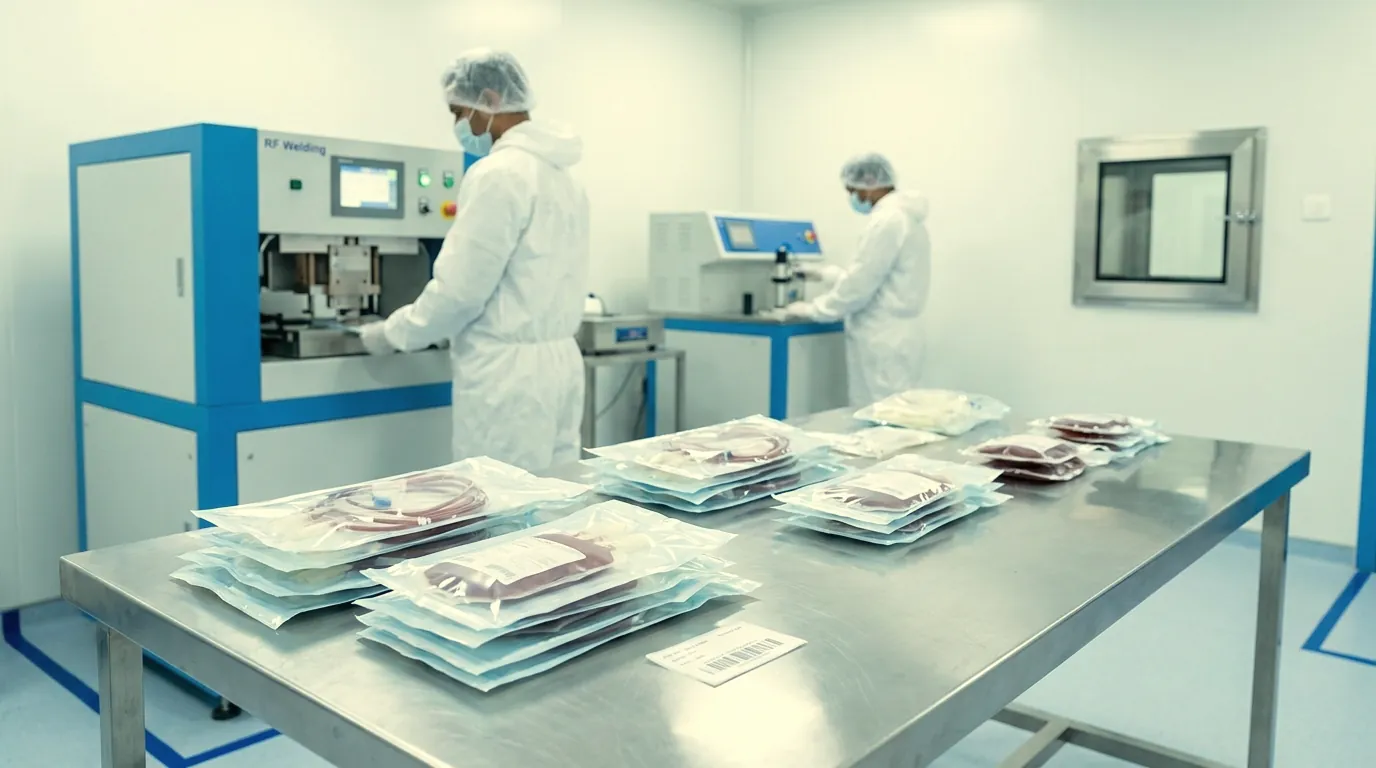
Sterile disposables, devices and kits, made in clean rooms, sterilised in-house or outside.
Reagents, kits and consumables that live and die by their lot and expiry.
Polymers, components and packaging that must be cleared before they are used.
Material arrives and is used before anyone has tested it. Or it sits in a corner for a week because nobody knows it is waiting. The release lives on a paper form that an auditor has to take on trust.
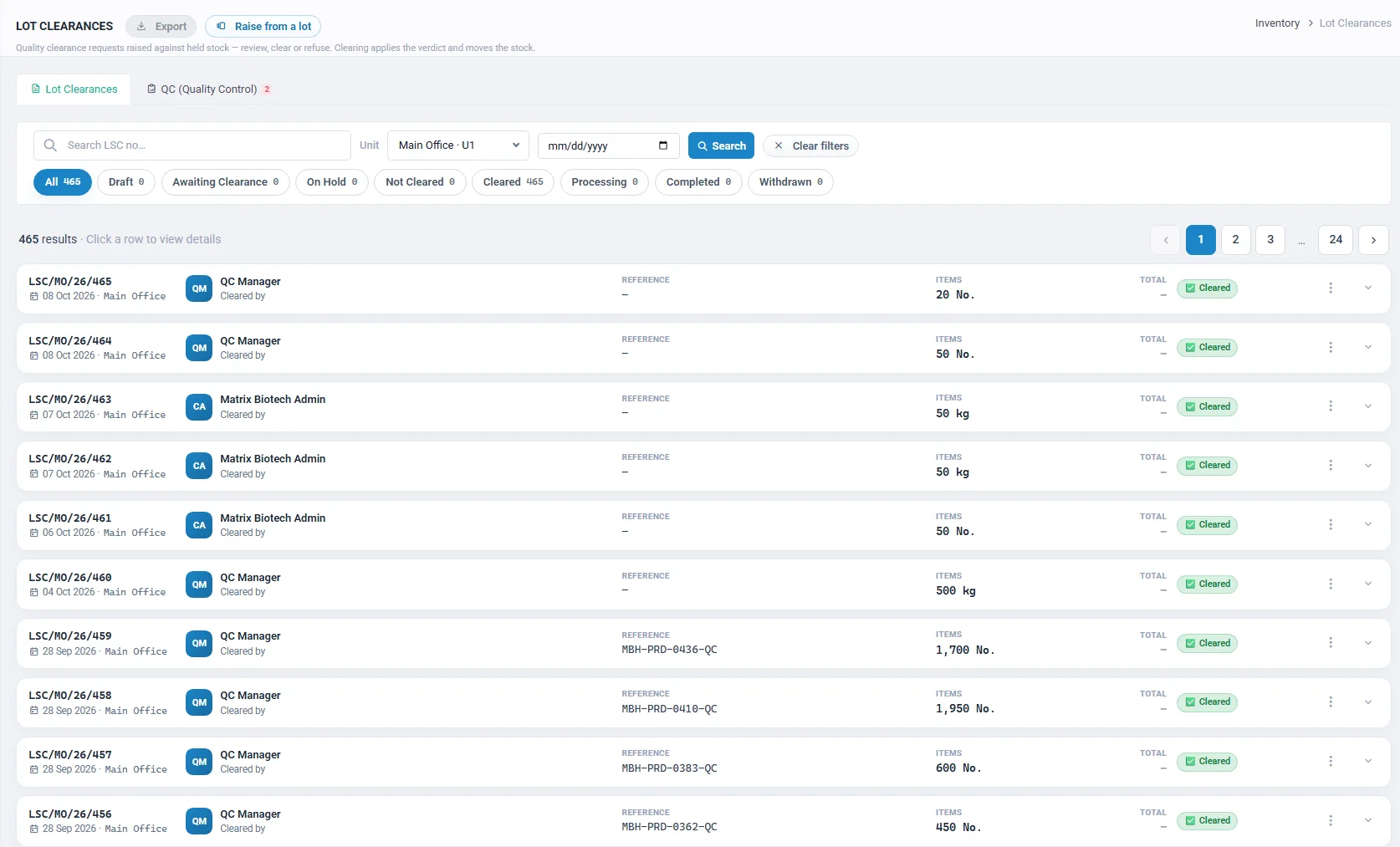
Items marked as quality-controlled arrive on hold and cannot be issued until they are cleared. Only a person with the clearance right can release a lot, in full or in part, and must write down why. A second person’s approval can be required for each decision. Every decision is journaled with who, when and why, and the journal is never edited.
Ask “which lots are waiting for a quality decision?” every morning. The assistant never clears a lot itself.

Test results are written in a register, and the certificate of analysis is typed from them later. Sooner or later a number is copied wrong, or a lot goes out with a test missing.
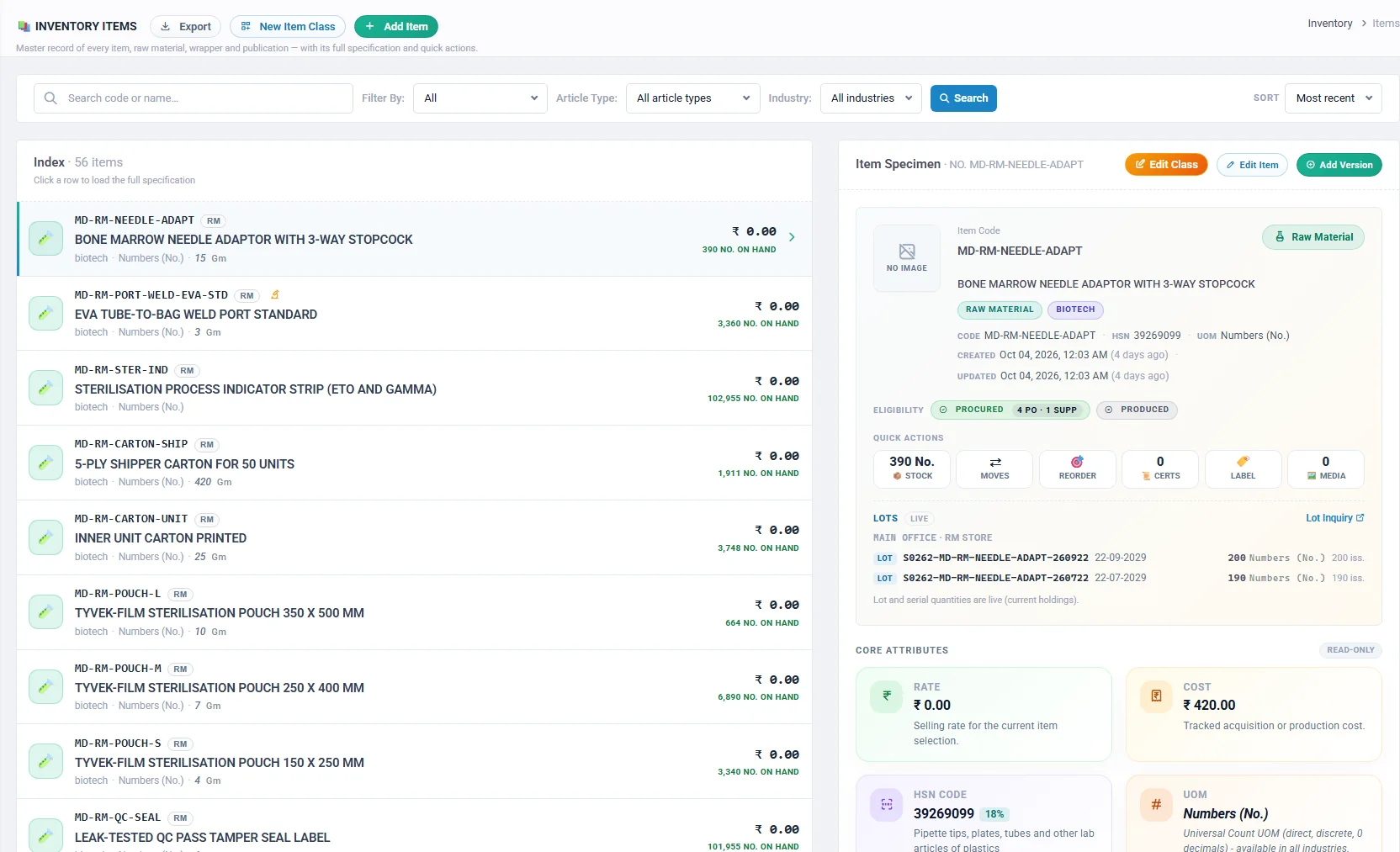
Specifications are versioned, test results are recorded against them, and the certificate of analysis prints from the recorded results. A lot cannot be released to use until every required test has passed. The supplier’s own certificate is filed against the lot, and a corrected certificate becomes a new version, not a replacement.
A result fails. Someone retests until it passes, the investigation is an email thread, and the same defect comes back next quarter.
An out-of-spec result opens a laboratory investigation with the retest rules built in. Defect reports are numbered and carry the root cause, corrective and preventive actions with owners and due dates, and an effectiveness check, with reminder mails until they close. A defect report can be raised from a production run’s rejects, from a lot, or from a customer’s complaint ticket. A Pareto view shows which defects keep coming back.
A supplier warns that a polymer batch is suspect. Finding every device made from it, and every hospital that received one, takes days of spreadsheets.
Search by your own lot code or the supplier’s batch code. The recall view traces the lot through stock movements, issues and orders to every customer and parcel it reached. Each item is tracked by batch or by serial number. Labels print as GS1-128 barcodes with the GTIN, lot, manufacture and expiry dates, and scanning a label finds the item and lot.
Ask “which customers received lot 2417?” and the assistant answers from the same trace.
Auditors ask who approved a release or changed a price. The answer is a signature on paper, or nobody remembers.
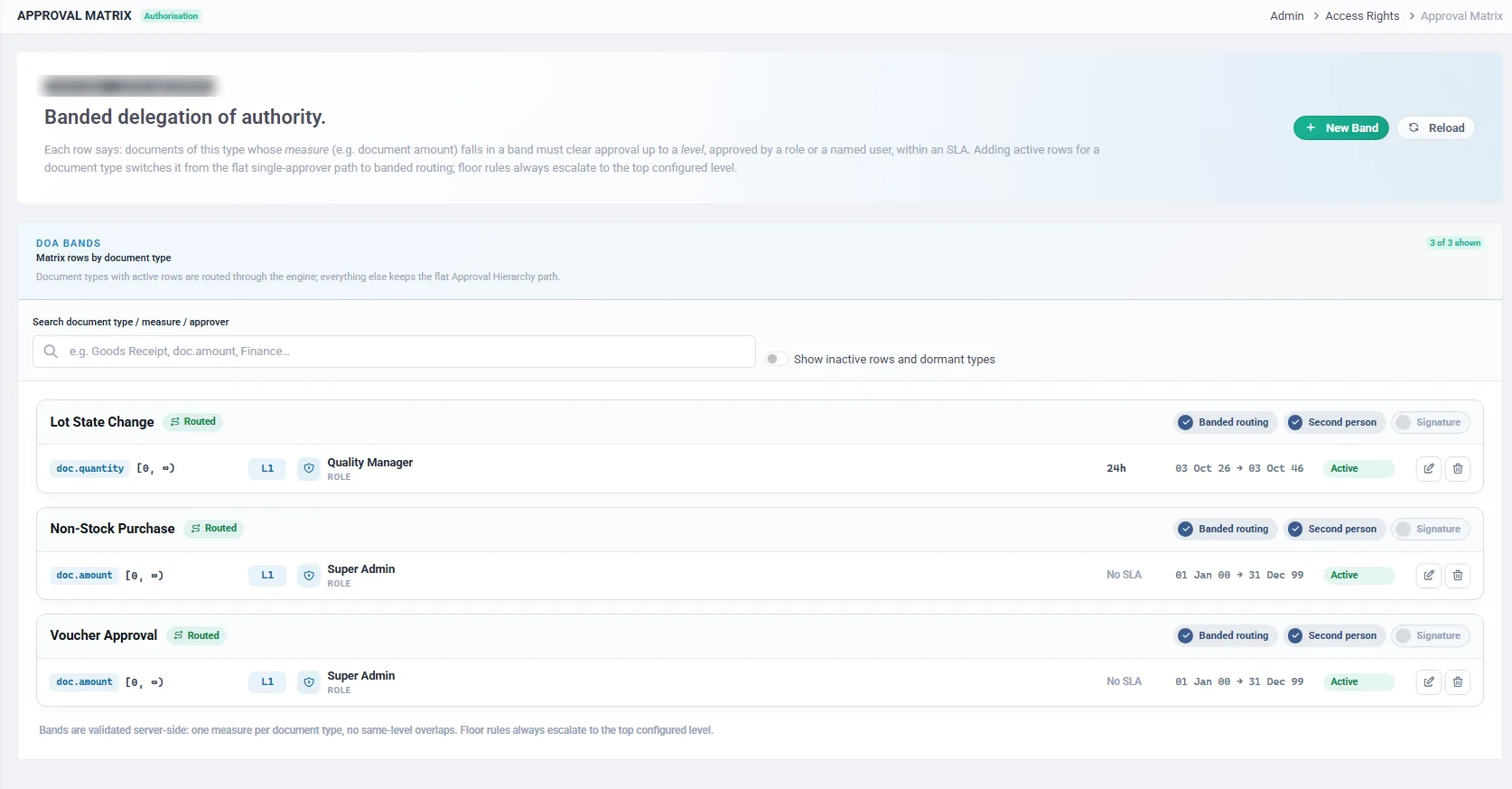
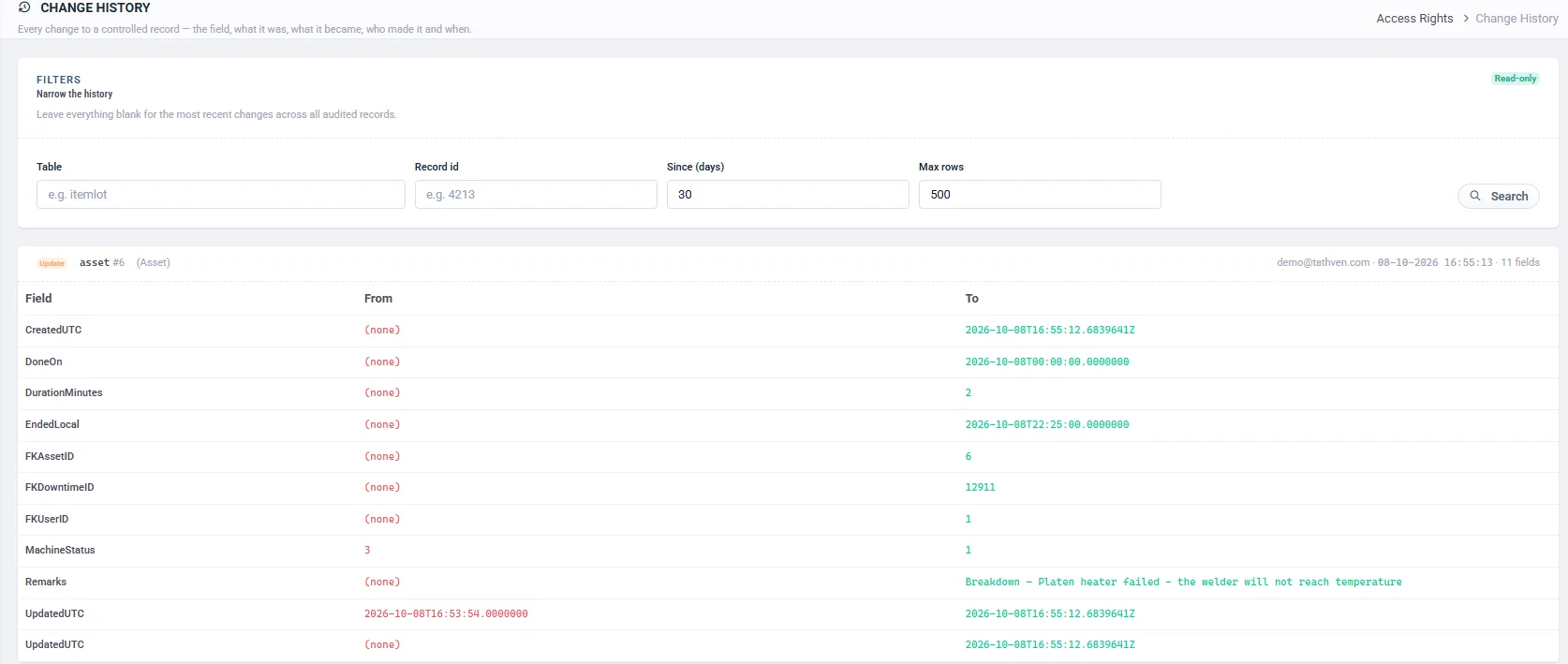
The approval matrix decides which documents need approval and by whom, with a second person where you require one. Electronic signatures can be switched on for each document type: the signer re-enters their password and states what the signature means (for example, released or approved), and the signature is bound to that record. Change history keeps the old and new values of audited records.
Documents that need a signature cannot be prepared by the assistant at all. A person signs them.
Clean-room time, welders, sterilisers and leak testers are booked on a whiteboard. A rush order upsets the week, and nobody sees which orders slip.
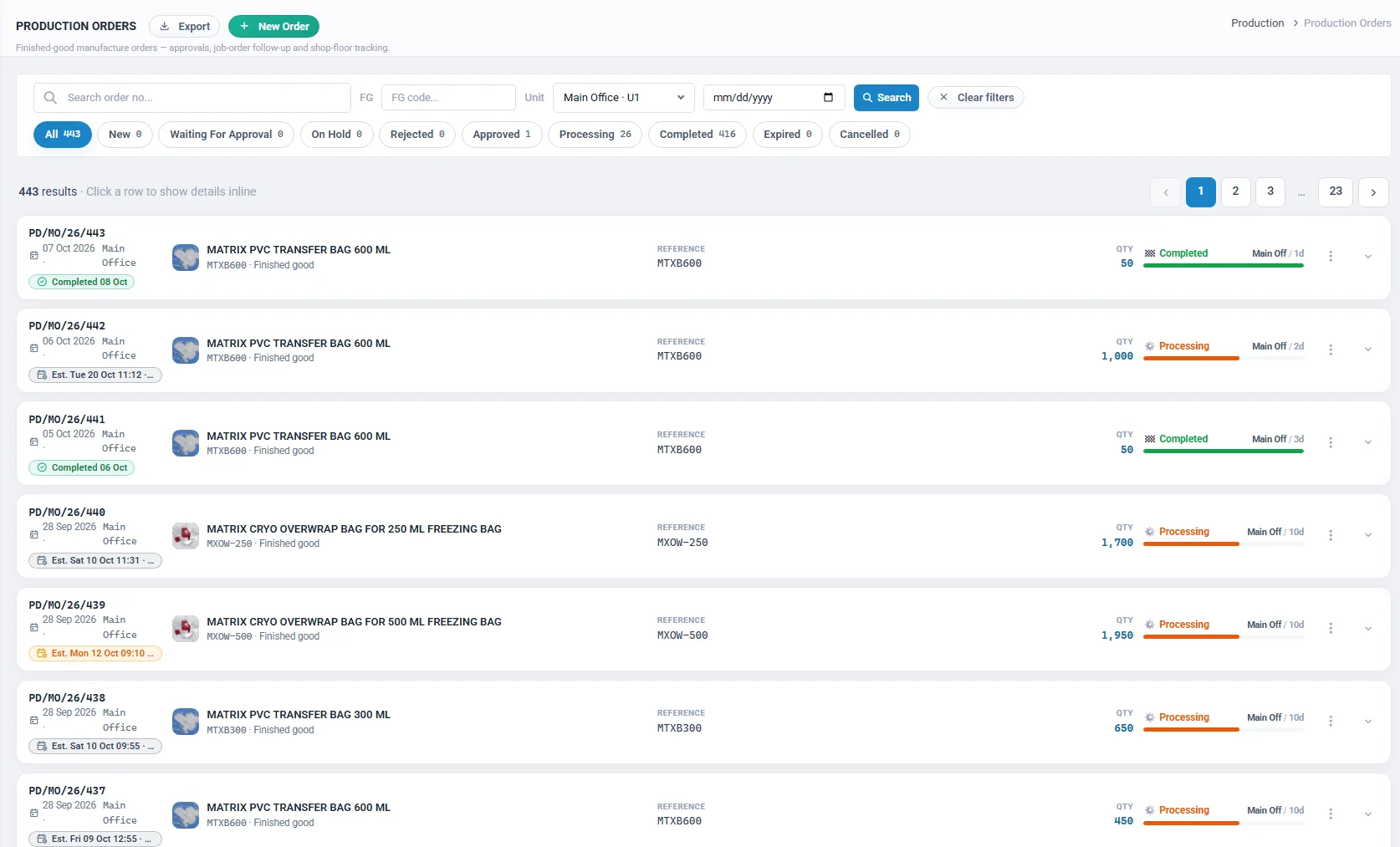
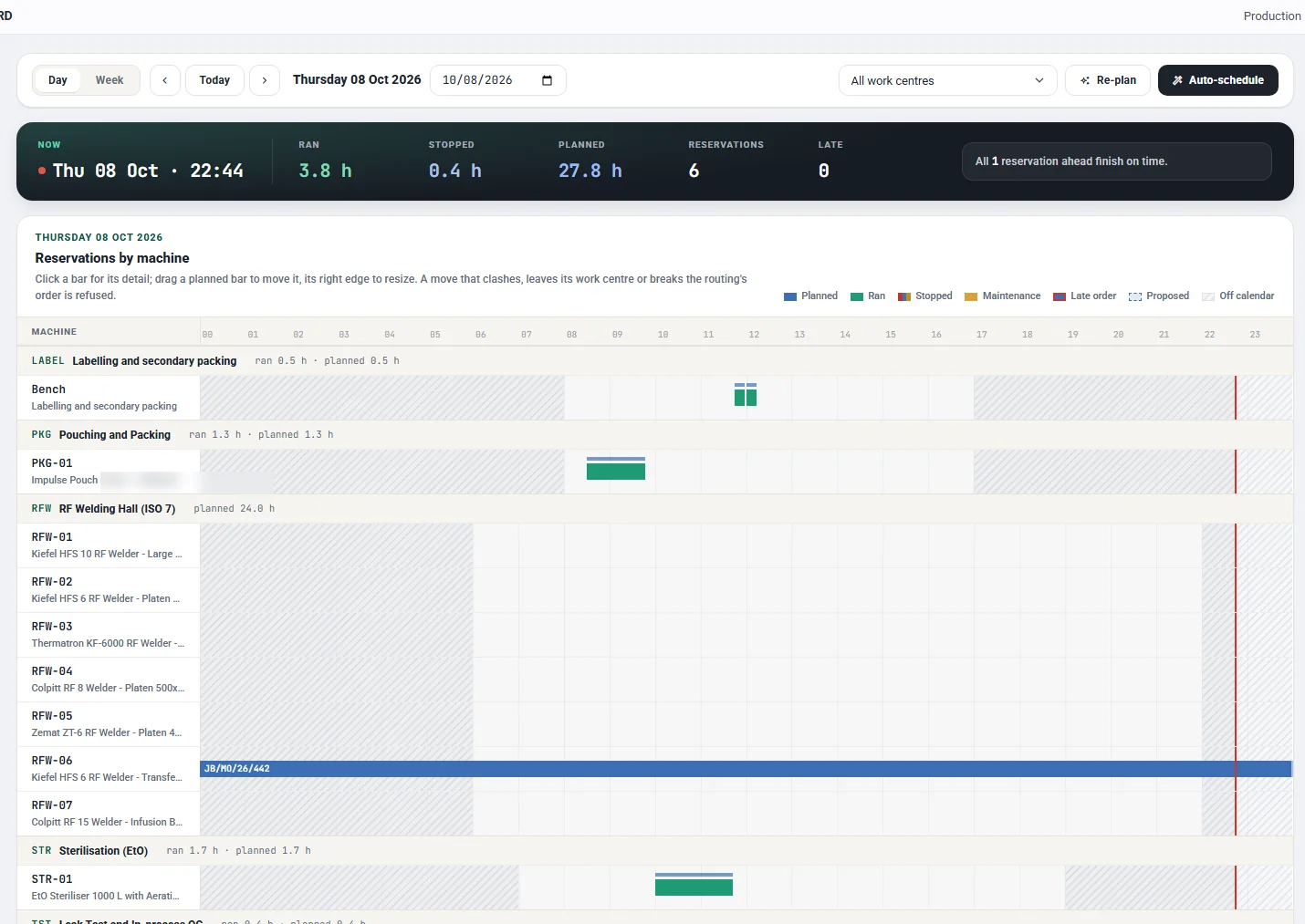
Each clean room, welding line, steriliser and tester is a work centre with its own machines, working calendar, machine-hour rate and operator pool with skills and leave. Production orders are scheduled on a board against what each machine can do, and auto-schedule places open orders by due date.
Ask “which production orders are running late, and why?” or “what happens if this rush order goes first?” The assistant reads the schedule, then prepares a reschedule or overtime for you to confirm.
First-piece and in-process checks are recorded on a sheet at the machine. A failed check is found after the batch is made.
Each operation can carry its own checks: a measurement between limits, a yes/no or a note, taken at first piece or at stop. A failed check marks the run. A run cannot be stopped while a required check is outstanding, and a defect report can name the check that failed.
Devices go to an outside steriliser and come back days later. What was sent, what came back and what is still there lives in challans.
A job order sends the batch to the sterilisation contractor, at the contractor’s rate card, with a date it is due back. Material is issued against the job order, and the balance comes back against it. GST’s ITC-04 return for goods sent to job workers is built from the same records. If you sterilise in-house, the steriliser is a work centre like any other.
Ask “what is still with the sterilisation contractor?”
A welder breaks down, a clean room has an excursion, and the reason is never recorded. Utilisation is a guess.
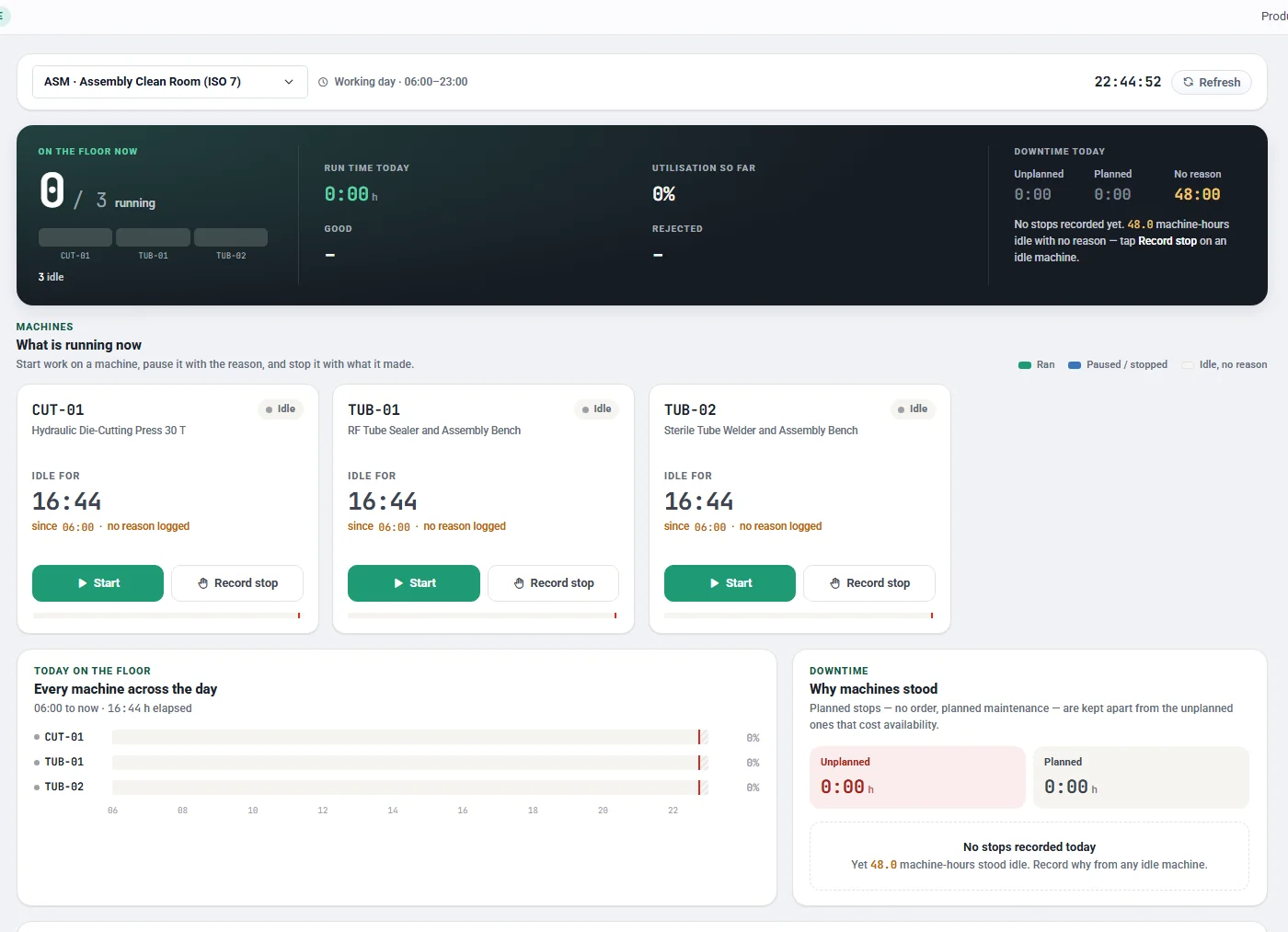
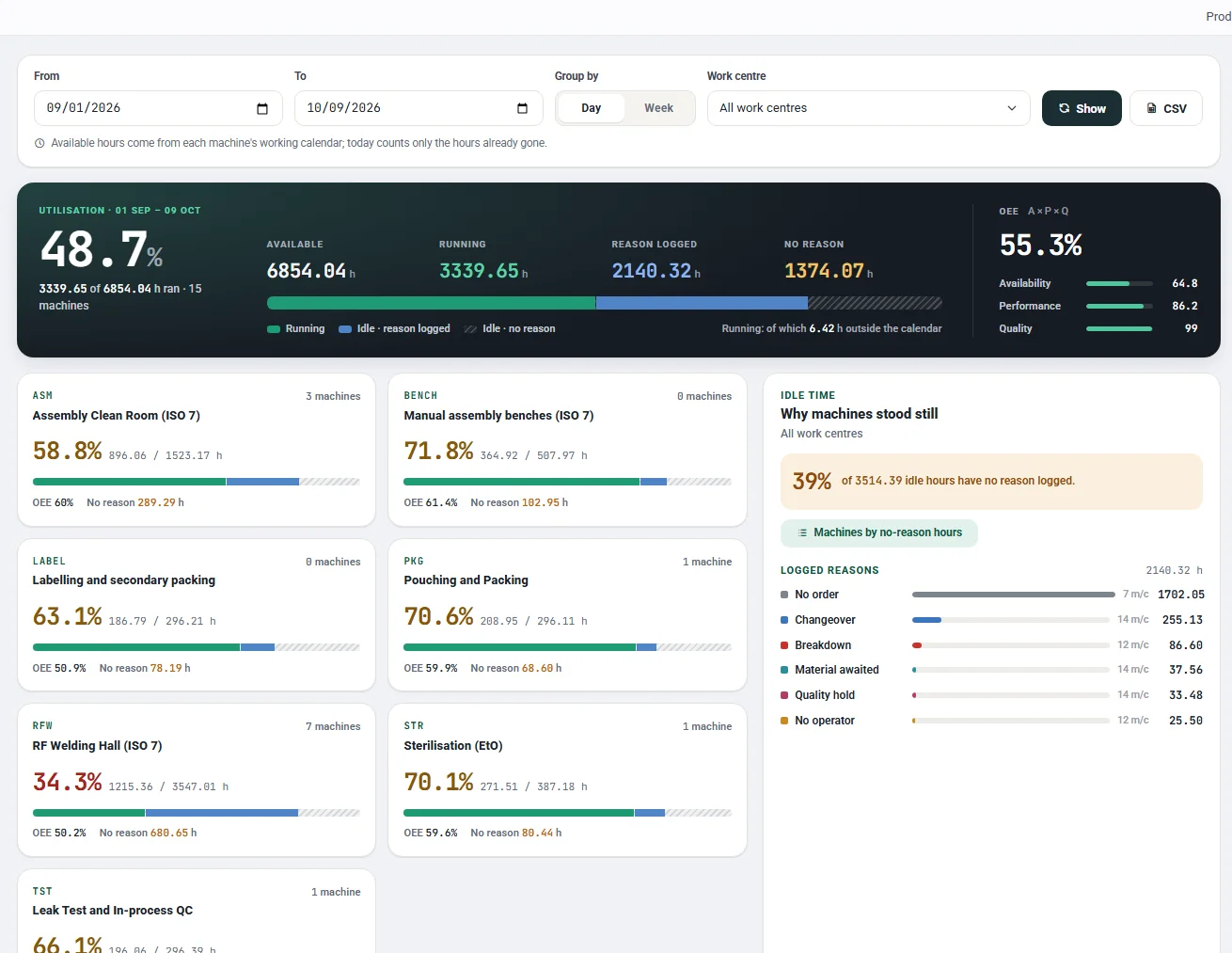
The shop floor screen starts, pauses and stops runs, with good and rejected quantities and the reason for every stop. Utilisation and OEE show how much of each machine’s time made good product, and what the idle time was spent on. Preventive maintenance is planned per machine, and a daily mail lists what is due or overdue.
Ask “how much downtime did the welding hall have this month, and why?”
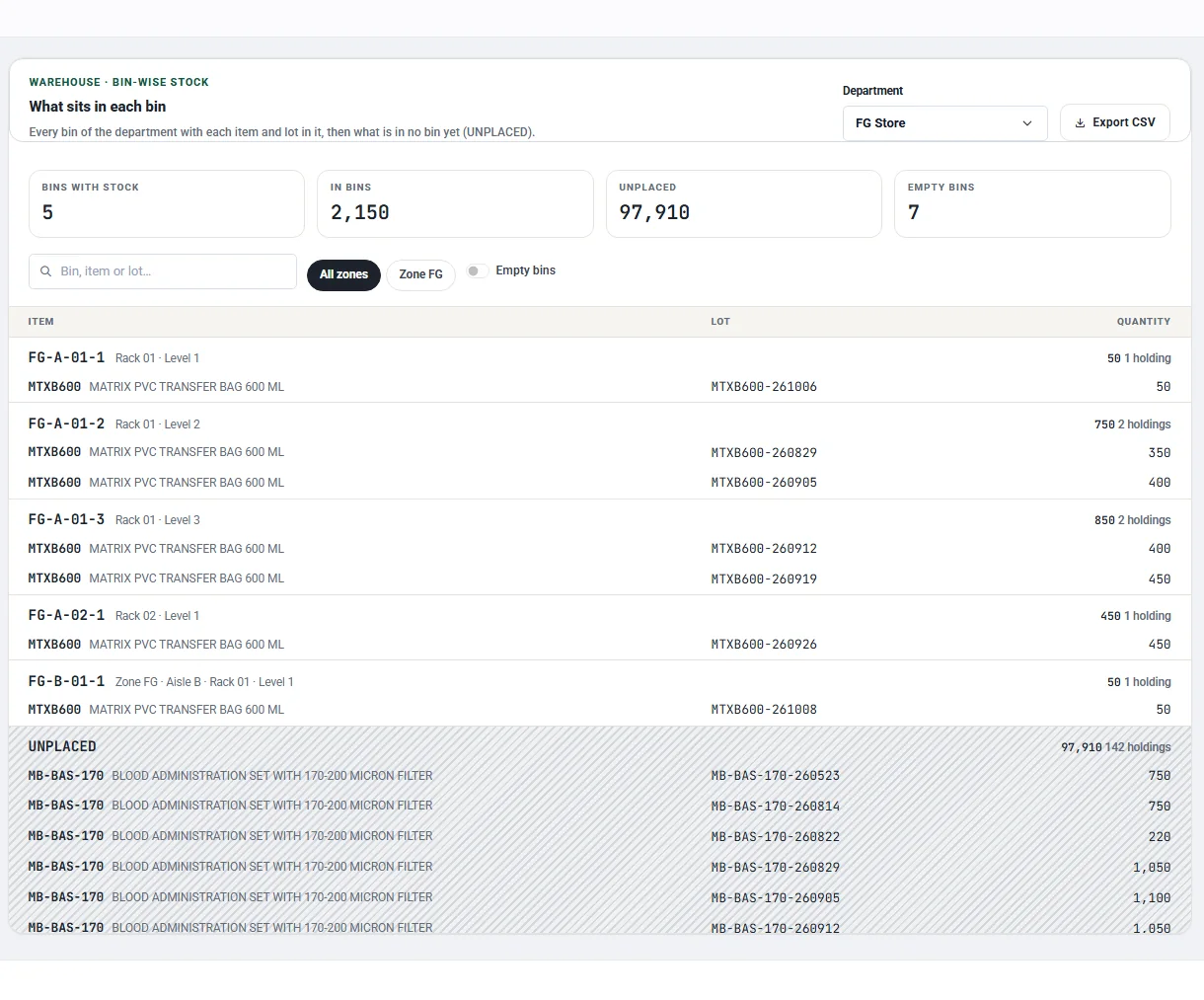
Components and reagents expire on the shelf because the newest lot was picked first. Buying is done by feel.
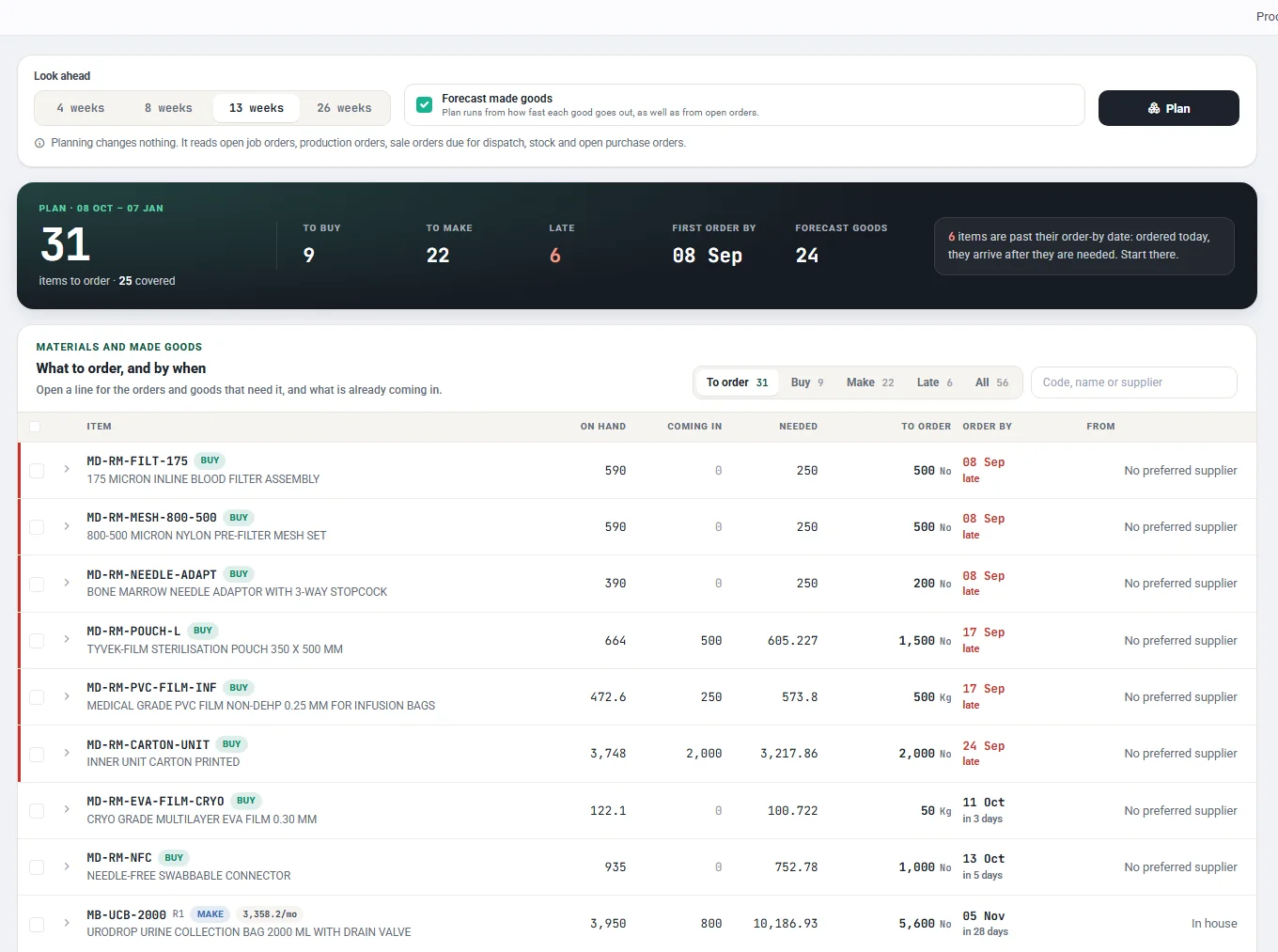
Goods issue picks first-expiry-first, and expired lots are kept out of it. Material planning works out what open orders need against stock and open purchases, and proposes the purchase and production orders for you to confirm. A weekly mail lists the lots near their expiry.
Ask “what should I reorder this week?” and the assistant prepares the purchase order for you to confirm.
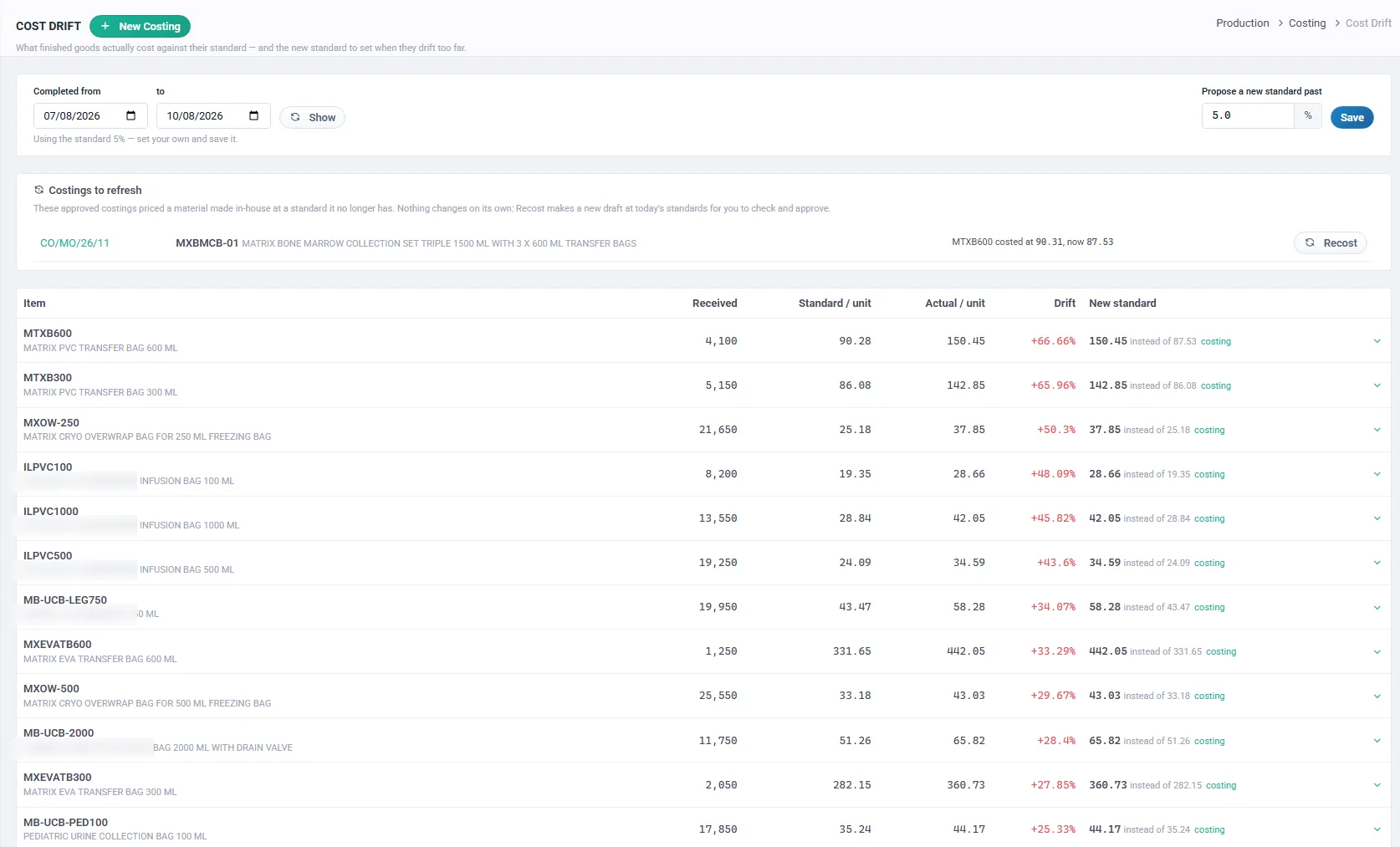
The standard cost was set once. Material prices, scrap and contractor rates have moved since, and margins on some devices have quietly gone.
Costing orders work out the cost of a run from the bill of materials, job rates, expected wastage and your overhead. The cost-drift view compares the actual cost of completed orders with the standard and shows which devices have drifted, by how much. Anything left in work in progress when an order is closed goes to a variance account, not into stock.
Ask “which devices has cost drift flagged?”
Hospitals buy on credit, distributors want terms, government orders come through GeM, and a consignment leaves before anyone checks the money. Returns come back and go straight onto the shelf.
Every buyer has its own credit days and limit. An order is cleared for dispatch only when it is paid, unless the buyer is on credit terms and within them. A carrier dispatch cannot be saved without its tracking number. Government orders come in through the GeM connector. A customer return goes back into a lot on quality hold, so it is checked before it can be sold again.
Devices, parts, packaging and services carry different GST rates. The month never closes because stock and accounts disagree.
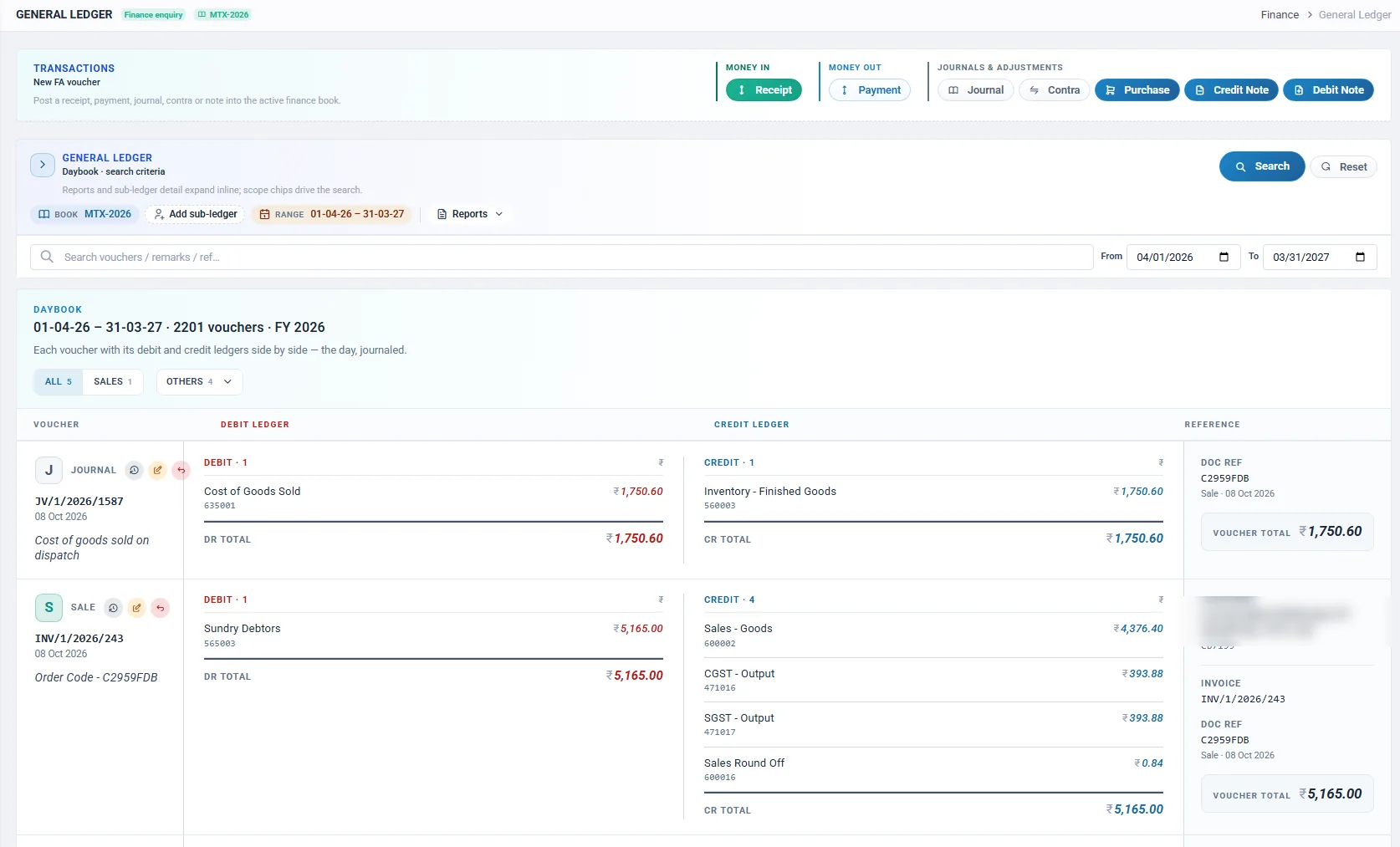
A medical-device HSN catalogue sets devices and diagnostic kits at 5%, and parts, packaging and services at their own rates. Every stock movement reaches the books by itself. GST returns (GSTR-1, GSTR-3B and the annual return) are built from the tax ledger, and a month can be locked once it is closed.
In a regulated plant, nobody wants software that does things on its own.
Tathven’s AI assistant answers from your own data, within your own access rights:
It can prepare a purchase order, a schedule change or overtime, and move documents through their approval steps, each on a card you check and confirm. It never clears a lot, never signs, and cannot touch documents that need an electronic signature.
Quality, production, stock, sales and accounts in separate systems means the batch record is stitched together for every audit.
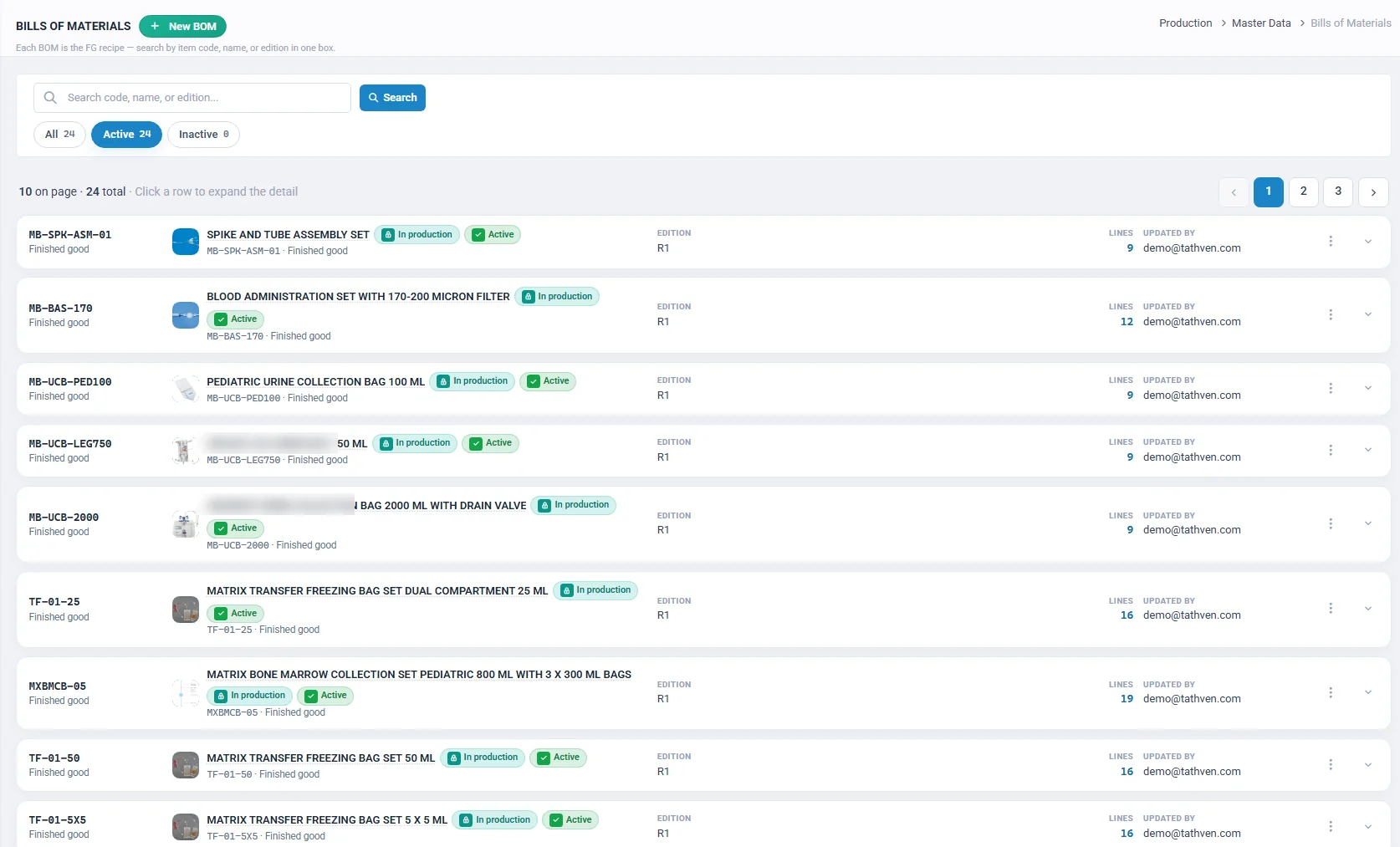
Quality decisions, production runs, stock movements, sales and the books are one system, linked by the lot. Tathven AI Workspaces keeps specifications, supplier certificates and documents beside the records they belong to. The CRM turns a customer complaint into a ticket, and the ticket into a defect report.
Quarantine on receipt, release by a named person with a reason, second-person approval, decision journal.
Versioned specs, test results, certificate of analysis, supplier certificates.
Out-of-spec investigation, defect reports with corrective and preventive actions, effectiveness checks, Pareto.
Batch or serial tracking, GS1-128 labels with GTIN, lot and expiry, scanning, recall to customer and parcel.
Work centres with machines and operator pools, scheduling board, in-process checks, shop floor runs, utilisation and OEE, maintenance.
Outsourced sterilisation and processing, material issue and return, ITC-04.
First-expiry picking, near-expiry mails, material planning, costing orders, cost drift, production variance.
Credit terms and dispatch rules, hospitals and distributors, GeM, returns into quality hold.
Approval matrix, optional electronic signatures, change history, month lock.
An assistant that answers and prepares, and never releases or signs.
Bring your specifications, your clean rooms and your contractors. Tathven Agentic ERP brings the rest. Choose Inventory or Manufacturing, and grow without changing systems.