Modular and panel furniture makers
Kitchens, wardrobes and office furniture cut from board.

Boards, timber, fabric and fittings in stock, the wood shop, finishing and upholstery on a schedule, finish defects on record, and installation billed with the furniture. Tathven Agentic ERP runs a furniture maker in one system.
Kitchens, wardrobes and office furniture cut from board.
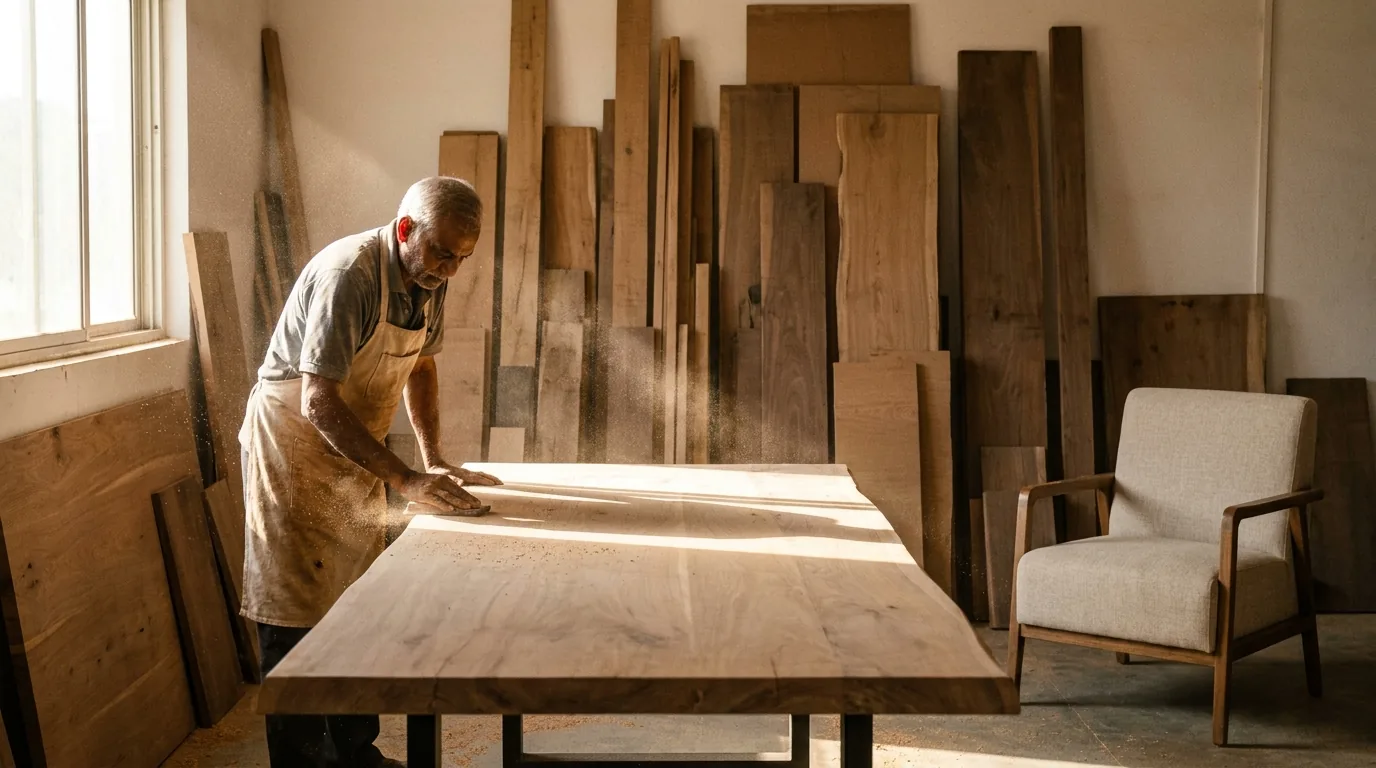
Tables, chairs and beds made from timber.
Sofas and chairs with frames, foam and fabric.
A job is ready to cut and the board in the right finish is not there, or the hinges ran out yesterday.
Boards and panels are stocked in square metres, upholstery fabric and foam in metres, and hardware by the piece. Material planning explodes open orders through their bills of materials, nets them against stock and open purchases, and proposes purchase and production orders for you to confirm.
Ask “what do I need to order for next week’s jobs?” and the assistant prepares the purchase order for you to confirm.
Timber arrives too wet and warps after it is made, or the board is thinner than ordered.
Boards and timber can be held on receipt until a person with the clearance right releases them. Ready receipt specifications check board thickness, size, moisture, grade and emission class, and timber species, moisture, knots and splits, and section size. The timber yard is kept as a store of its own.
Jobs queue at the panel saw, the edge bander or the spray booth, and nobody sees which order slips.
Panel saws, edge banders, CNC routers, spray booths and hot presses come as ready machine types, each with its own fields. The wood shop, finishing and polishing, and upholstery come as departments. Each machine sits in a work centre with its calendar and machine-hour rate, production orders are scheduled on a board, and auto-schedule places open orders by due date.
Ask “which orders are running late, and why?” The assistant prepares a reschedule or extra overtime for you to confirm.
Cutting, banding, pressing, sanding, polishing and fitting are done by habit, and the cost of each step is unknown.
Operations come ready for furniture: panel cutting, edge banding, CNC routing and boring, laminating and pressing, sanding, polishing and painting, upholstery, hardware fitting and flat packing, with dust extraction and compressed air as an overhead. Each product’s bill of materials and routing use them, with the wastage you expect at each step.
The saw breaks down, the booth is being cleaned, the finish is still curing, and the reason is never recorded.
The shop floor screen records each run with good and rejected quantities and the reason for every stop. Downtime reasons come ready for furniture: panel saw, edge bander and CNC router breakdowns, spray booth cleaning, board awaited and finish curing hold. Utilisation and OEE show how much of each machine’s time made good parts.
A piece reaches the customer with a chipped edge or a missing hinge, and the same problem comes back next month.
Rejects name their defect: scratch or dent, edge chipping, loose joint, uneven finish, warped panel or missing hardware. A defect report carries the root cause and corrective and preventive actions, and a Pareto view shows what keeps coming back. A ready release specification checks size, height, stability and load, finish and colour against the approved sample, and the fittings before a piece leaves.
A customer wants a price for a custom wardrobe today.
A costing order works out the cost from board, fittings, machine hours, job rates, wastage and overhead, and suggests a sale price. The cost-drift view shows which products have moved away from their standard cost.
Pieces go out for polishing or upholstery, and what came back lives in challans.
A job order sends the work to a contractor with material issued against it and a due-back date, unused material comes back to stores, and GST’s ITC-04 return is built from the same records.
The furniture is invoiced, and the installation is billed later, or never.
Installation and refinishing are services on the same order and bill as the furniture. Modular kits are sold as sets. Every buyer has its own credit days and limit, and an order is cleared for dispatch only when it is paid or within credit terms.
Returns are typed by hand.
An HSN catalogue for wooden furniture, upholstered seating, particle board, MDF and furniture fittings comes ready. GST returns are built from the tax ledger, and purchases are reconciled against GSTR-2B.
Boards by area, fabric by length, hardware by piece, receipt holds, ready board and timber specifications.
Panel saw, edge bander, CNC router, spray booth and hot press types, wood shop, finishing and upholstery departments.
Finite-capacity board, auto-schedule, drag to reschedule.
Runs, rejects by defect, furniture downtime reasons, utilisation and OEE.
Furniture defect types, defect reports with CAPA, release specifications.
Ready furniture operations, costing orders, cost drift, contractor job orders, ITC-04.
Furniture with installation on one bill, modular sets, credit terms, furniture HSN catalogue.
An assistant that reads the shop and prepares the next step for you to confirm.
Bring your machines, your designs and your fitters. Tathven Agentic ERP brings the rest, on the Manufacturing plan with the furniture catalogue.